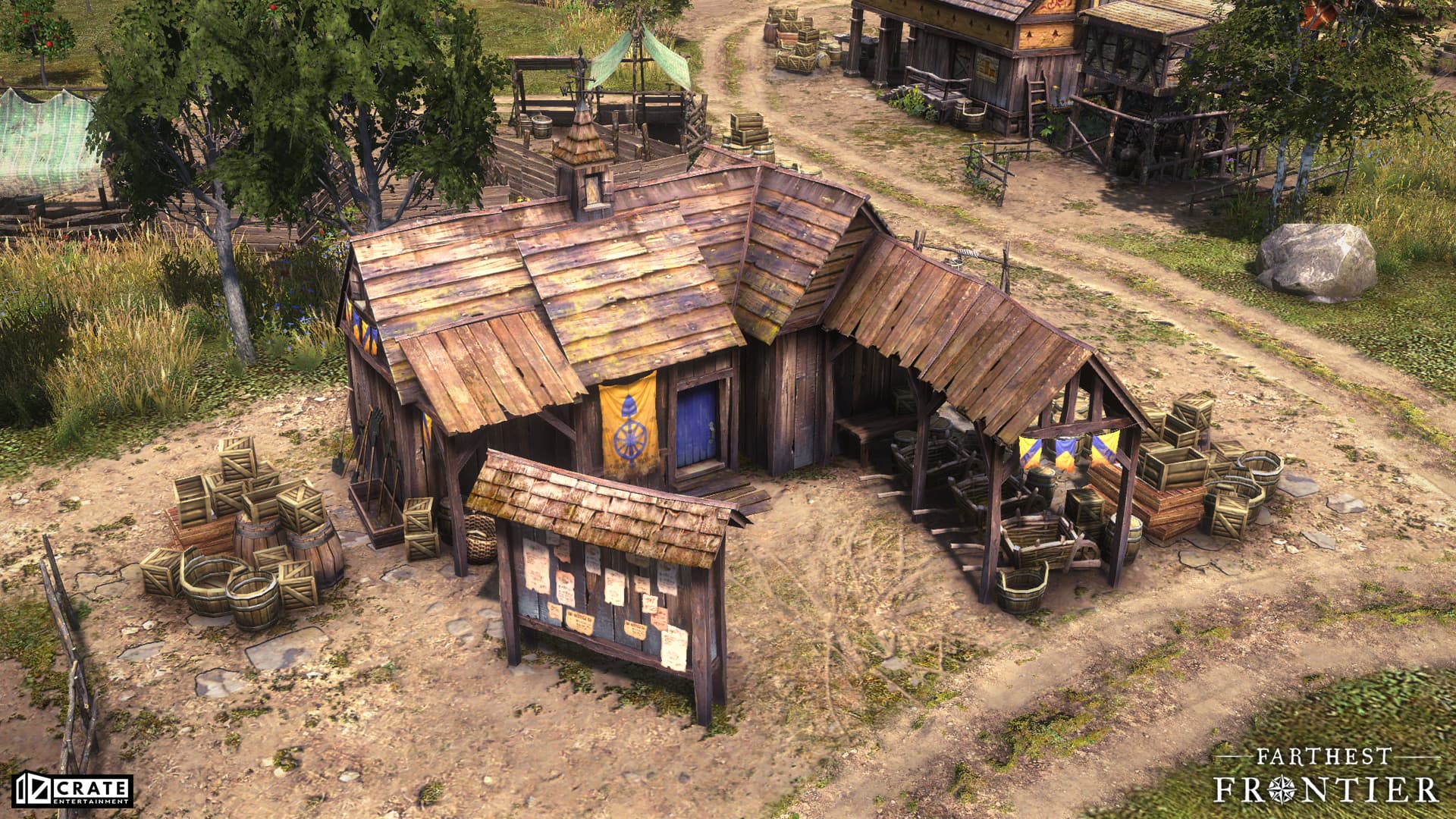
Farthest Frontier is a settlement building and survival game developed and published by Crate Entertainment. You guide a small group from a wilderness outpost toward a growing town, gathering resources, producing food and goods, and caring for its residents. The full PC release arrived on October 23, 2025, following an Early Access launch in August 2022. Steam lists it as a single-player game for 64-bit Windows 10 or later.
Its systems are closely connected. A field needs suitable crops and soil care to keep producing; a workshop needs materials, workers, and a practical route for deliveries. As the town grows wealthier, residents’ needs change, and raids add another demand if you enable them. This overview explains how those decisions fit together and which settings let you shape the experience.
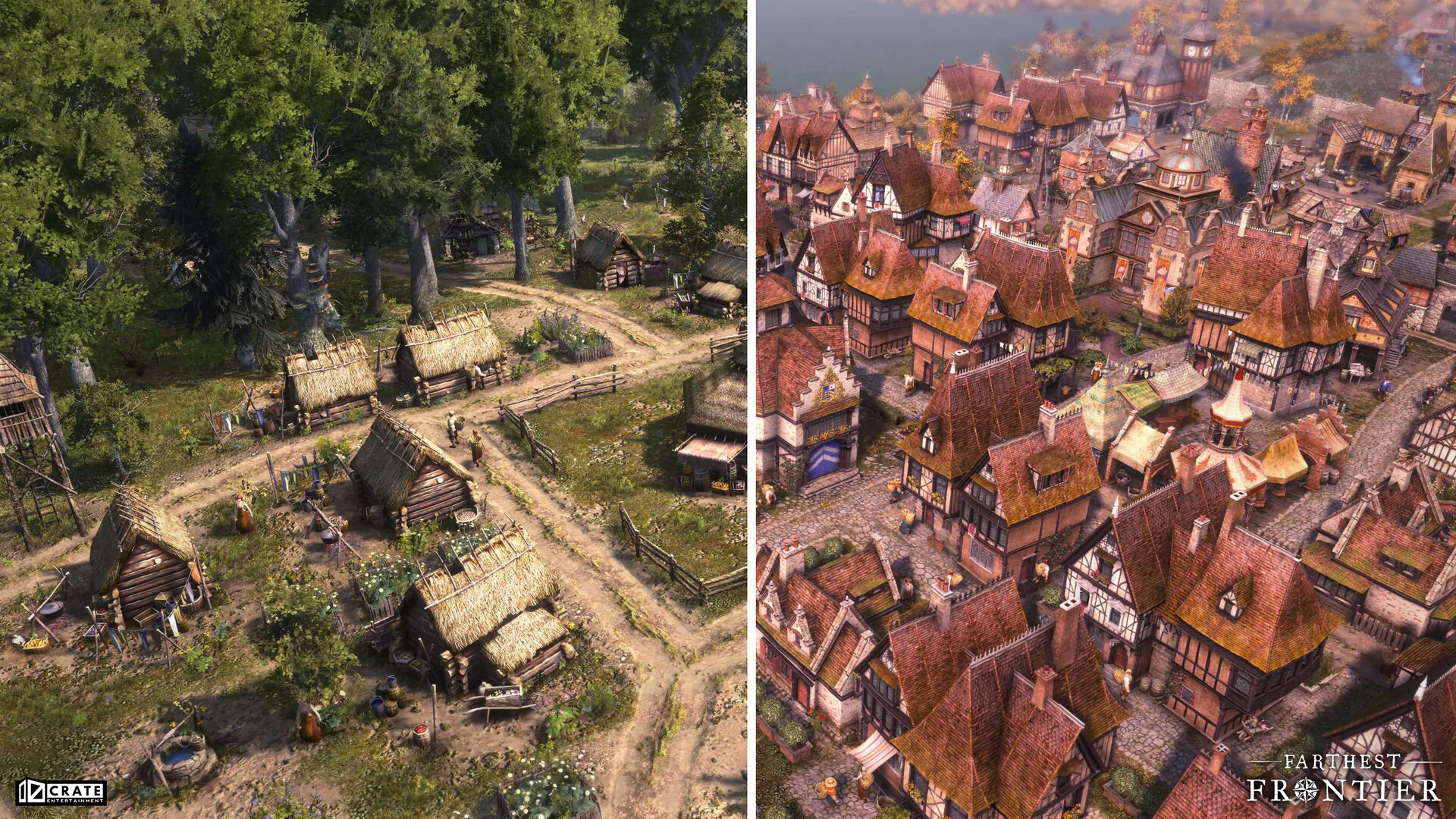
From Outpost to Town
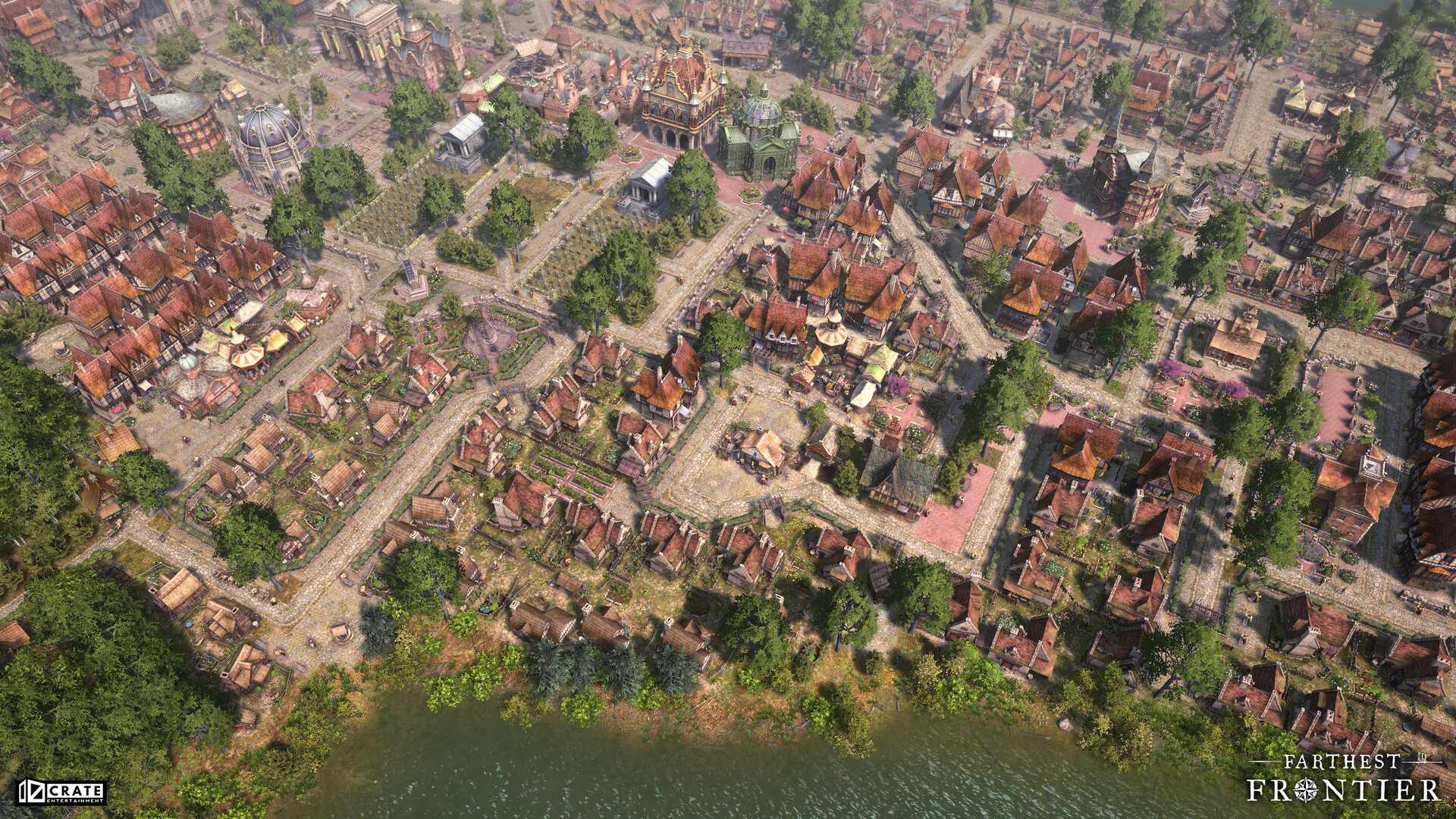
An early settlement draws on timber, stone, foraged plants, hunting, and fishing. The resources nearby depend on the randomized map and its biome. A site with useful forage may lack something needed for later industry, while another offers different advantages. Before expanding, it helps to identify what the surrounding land can supply and what trade may need to cover. Crate’s resource guide explains how local availability shapes a town’s economy.
Housing and the town center advance through several tiers. Prosperity, desirability, and progress through the technology tree all contribute to development. Adding production buildings alone is therefore only part of growing a city: reliable supplies and an appealing place to live matter as well.
Farming and Health Need Different Solutions
Fields need more attention than planting the same crop repeatedly. Crops differ in how they handle heat and frost, while rotations help maintain fertility and limit disease. Weeds, rocks, and soil conditions also affect production. The useful rotation is the one that fits your land and food needs. Foraging, hunting, and fishing can supplement harvests, and appropriate storage helps preserve the food you produce.
A large food stockpile does not address every health risk. Clean water helps prevent certain intestinal diseases, while a varied diet reduces the risk of deficiencies. Shoes and clothing, medicine, waste collection, and rat control address other problems. If illness spreads, the remedy depends on what is missing from the town’s care and sanitation, not just its food supply. These systems are described on the game’s official Steam page.
Transport, Production Limits, and Trade
Goods do not move instantly between buildings. Villagers carry materials from work sites to producers, then take finished goods to storage, homes, or the trading post. Long trips consume working time, so roads, wagons, and well-placed storage can ease a shortage without immediately adding another workshop. Food storage matters for another reason: suitable buildings slow spoilage.
You can set minimum and maximum stock levels for manufactured goods. Production pauses at the upper limit and resumes once stock falls below the lower limit. That can help conserve scarce inputs or maintain a useful winter supply. Crate’s resource guide explains these controls and the different storage buildings.
Trade fills gaps in local resources and buys goods your town cannot yet make. Heavy tools are an early example: according to the official trading guide, merchants are initially the only way to get them. Goods must be moved into the trading post before they can be sold, and purchases require gold there. Merchants vary in what they bring and buy, so preparing stock ahead of a visit matters.
Choose How Dangerous the Frontier Is
Map characteristics and difficulty can be adjusted when starting a game. You can disable diseases and invaders, and pacifist play removes combat. That leaves room to focus on farming and logistics, or to build a town that must also withstand raids.
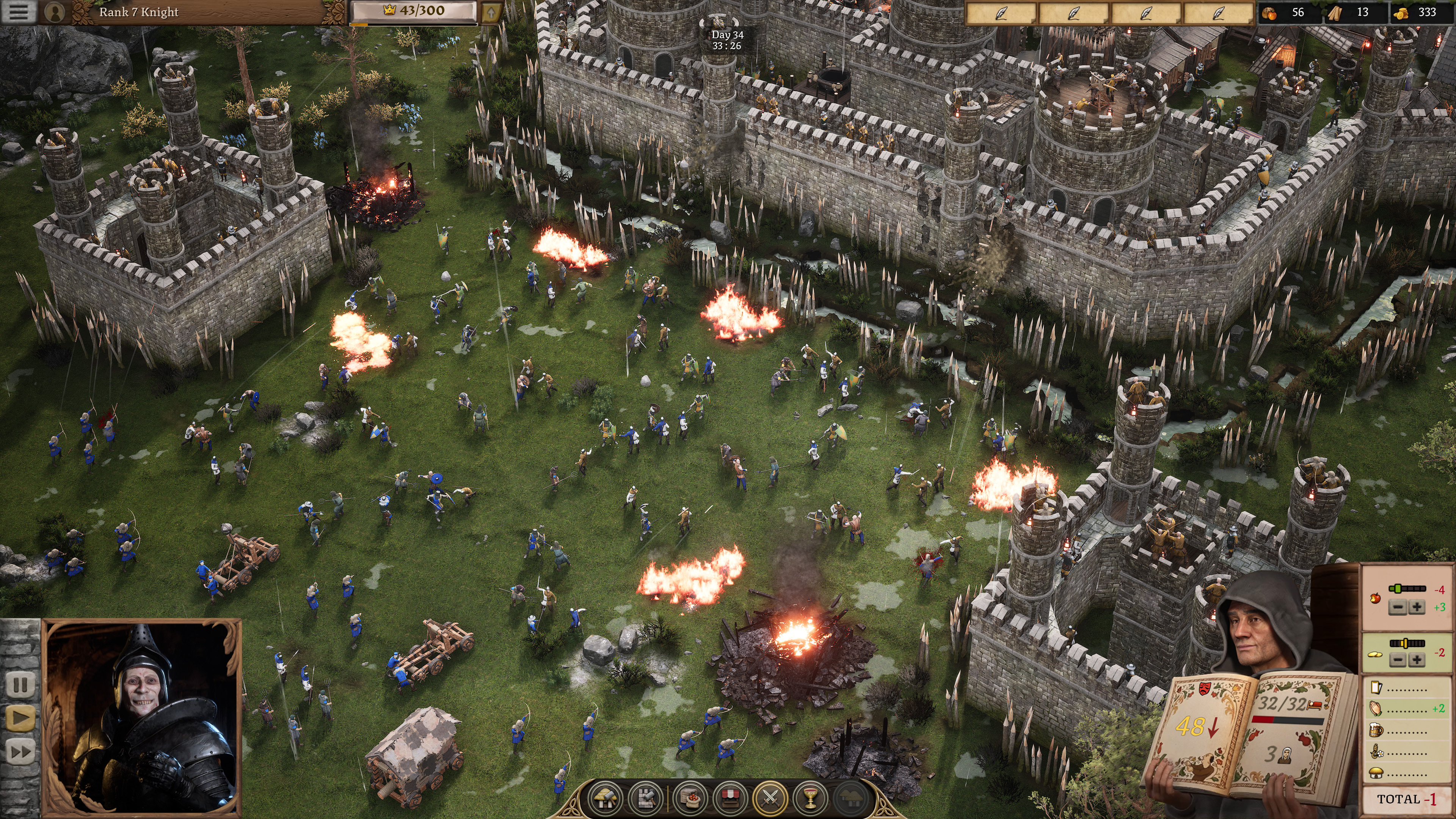
With invaders enabled, defense becomes another demand on the economy. Palisades, walls, towers, and barracks require resources and workers, while soldiers need equipment. Greater prosperity can attract raiders, making protection part of planning for a successful town. The game also supports mods through Steam Workshop. If you enjoy managing production chains and physical delivery routes, Farthest Frontier offers plenty to work through; the difficulty settings determine how much survival pressure and combat accompany that work.