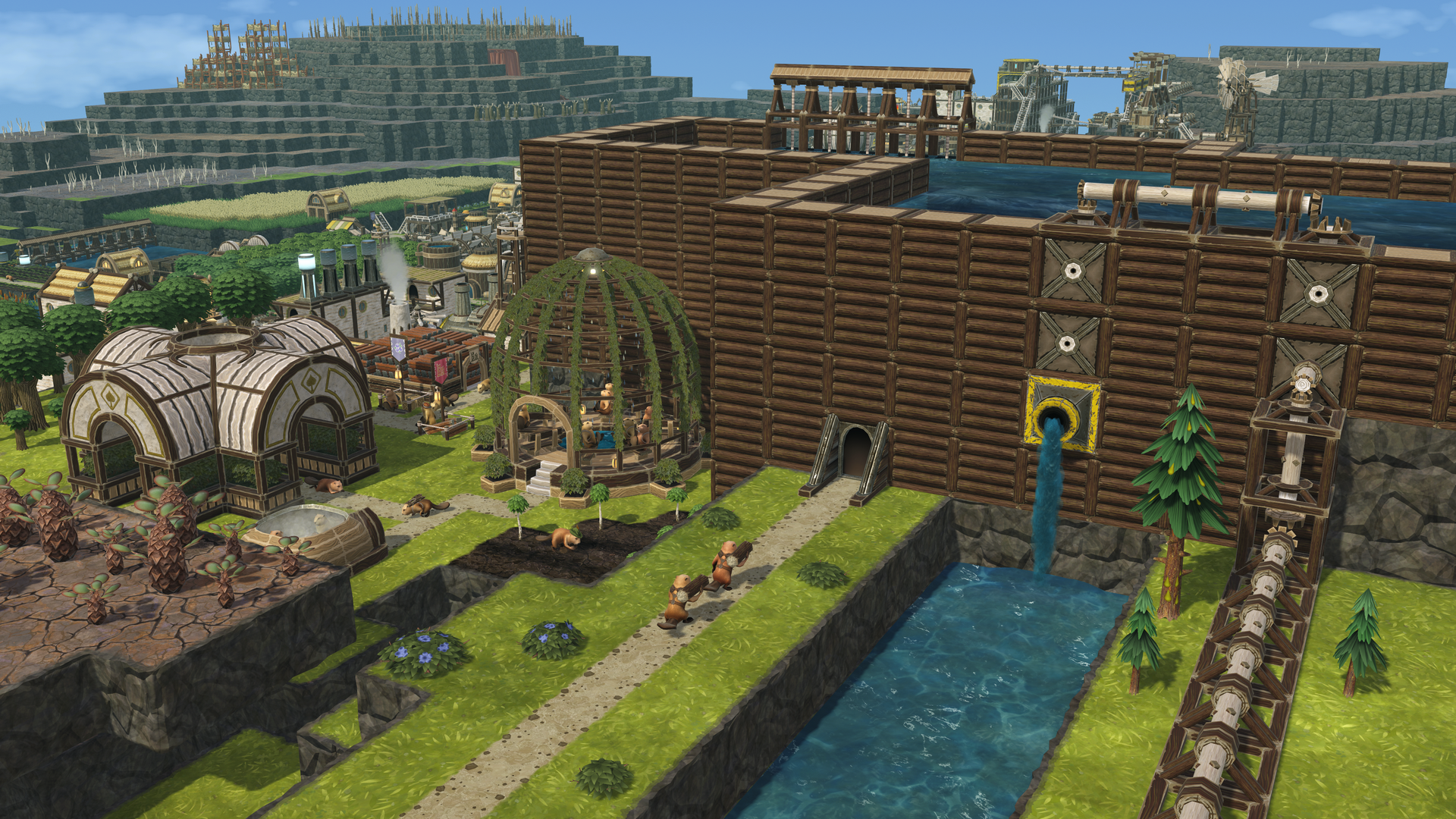
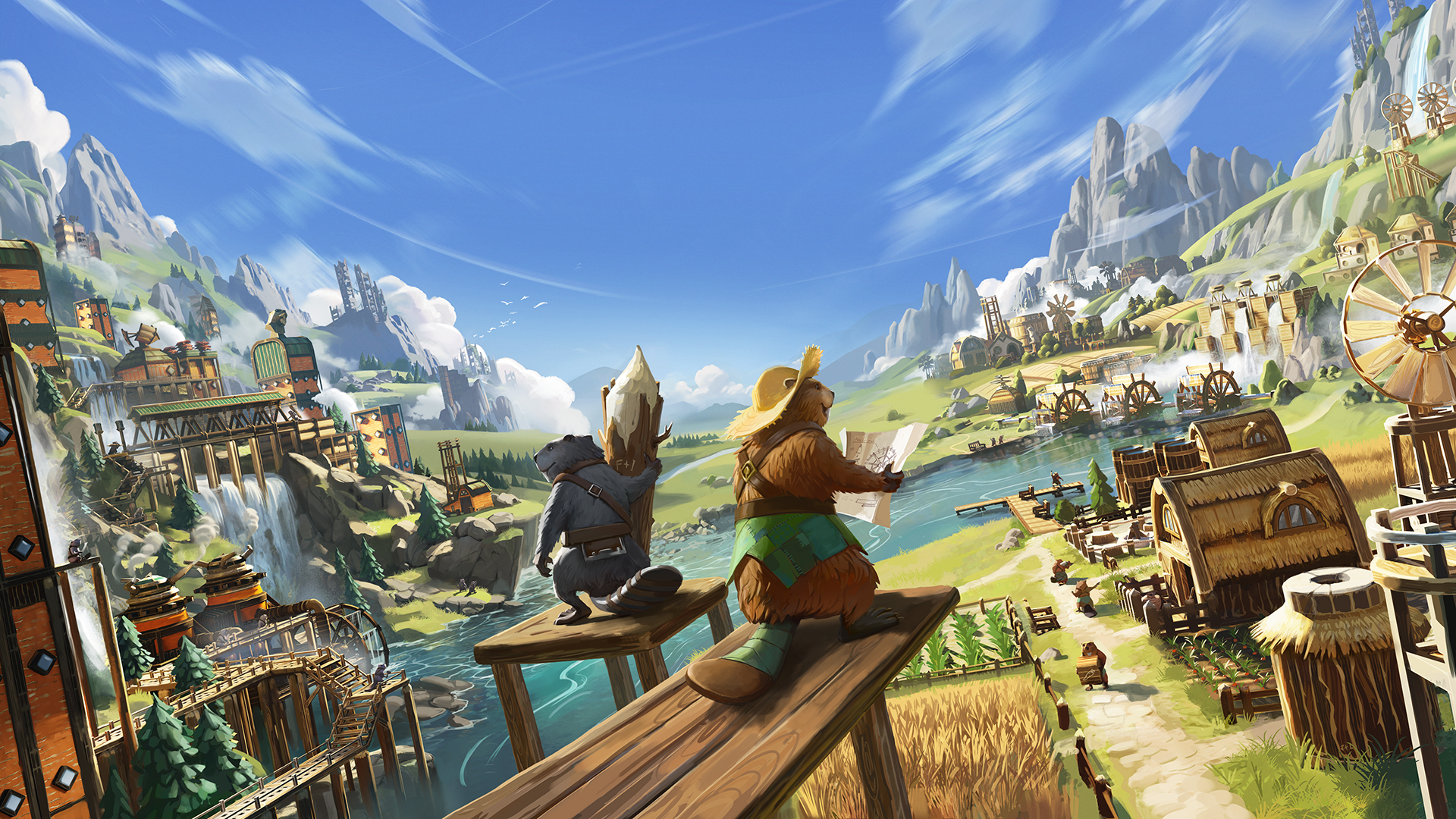
Timberborn is Mechanistry’s released city builder about keeping a beaver settlement alive through droughts and toxic badwater seasons. Rivers are part of the plan: dams and floodgates hold water back, while canals and pumps move it where fields and residents need it. The game’s three-dimensional terrain and water systems make the shape of a settlement as consequential as its stockpiles. Timberborn reached its full release in March 2026.
You choose between the nature-minded Folktails and the industrial Iron Teeth, each with distinct buildings and technology. Limited space encourages stacked housing and workshops, elevated paths and connected power networks. Wood, food and metal feed production chains, while sensors and relays can automate parts of a growing city. The built-in map editor and Steam Workshop add community maps to the included selection.
What Update 1.1 Changes
Released on September 3, 2026, Update 1.1 adds graphs for goods and population. You can change their time range and view the whole settlement or an individual district. Goods statistics separate stock, production and consumption, which helps identify whether a shortage comes from inadequate output or rising demand. Existing saves do not gain historical graphs: tracking starts only after you play them on version 1.1.
The update also expands reservoir construction. An Airlock gives beavers a route through a levee wall, while the Iron Teeth’s Impermeable Tubeway does the same for their transport system. An Impermeable Power Shaft and Compact Mechanical Pump offer more ways to carry power or move water around a reservoir. New Tier 4 monuments provide a milestone between the earlier Tier 3 monuments and endgame Wonders.
New Maps and Dry-Land Plants
The two new included maps make different demands on a settlement. Water flow changes with the cycles across the arid expanse of Nomads. Pillars gives builders fractured, limited space on its upper level. Both show how terrain and water movement can reshape an otherwise familiar city plan.
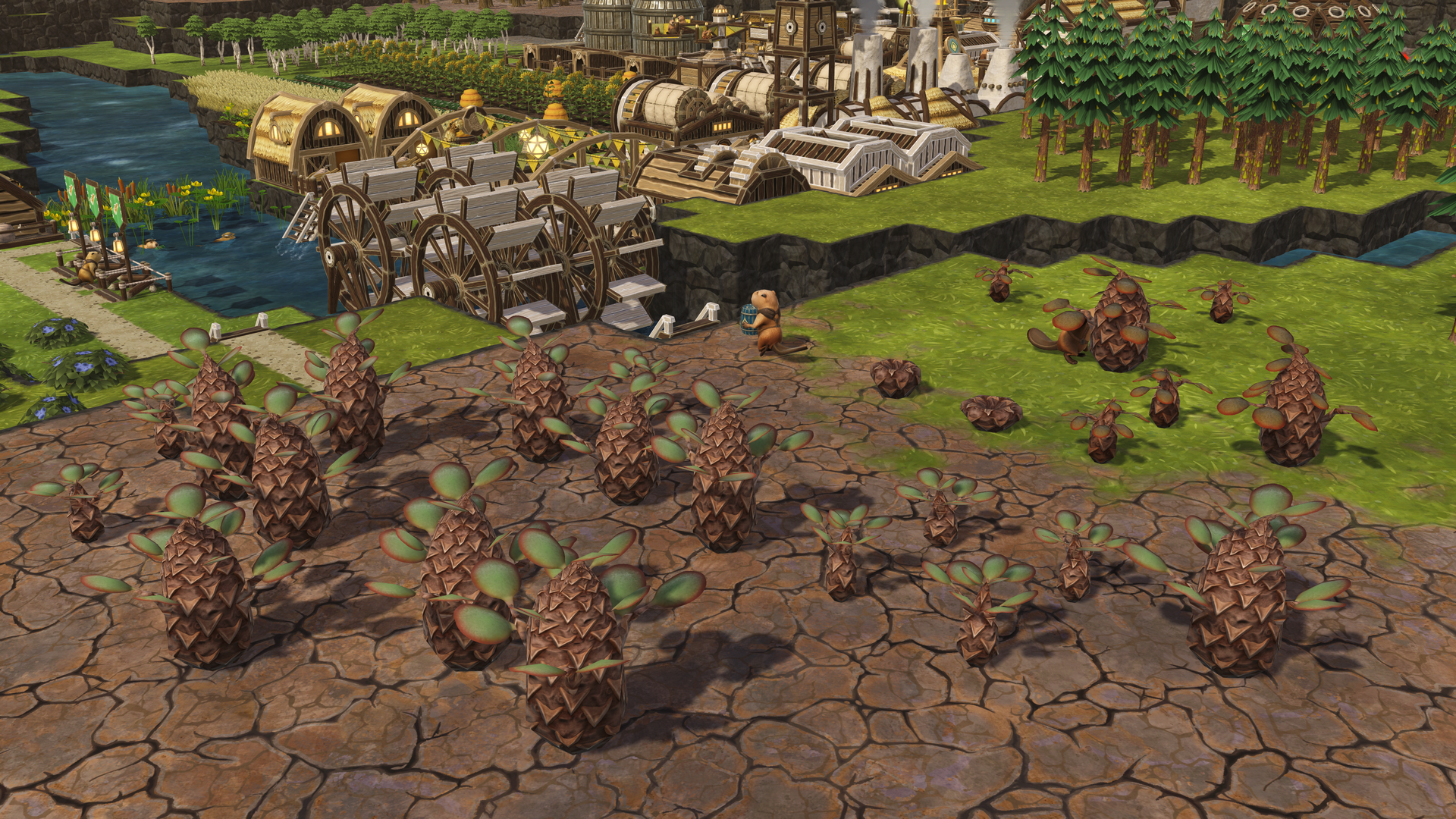
Image: Mechanistry · Source
Update 1.1 also introduces Succulents. They grow only on dry ground and die if overwatered. You can place them in the map editor; in a settlement, their stored water can be harvested after lumberjacks cut them. Mechanistry requires Succulents on maps entered in its current Build-a-Map contest, although the competition has no prescribed Succulent theme.